
Airbus Helicopters H135 / Eurocopter EC135
Seats
5
Maximum Range (nm)
335
ICAO Code
EC35
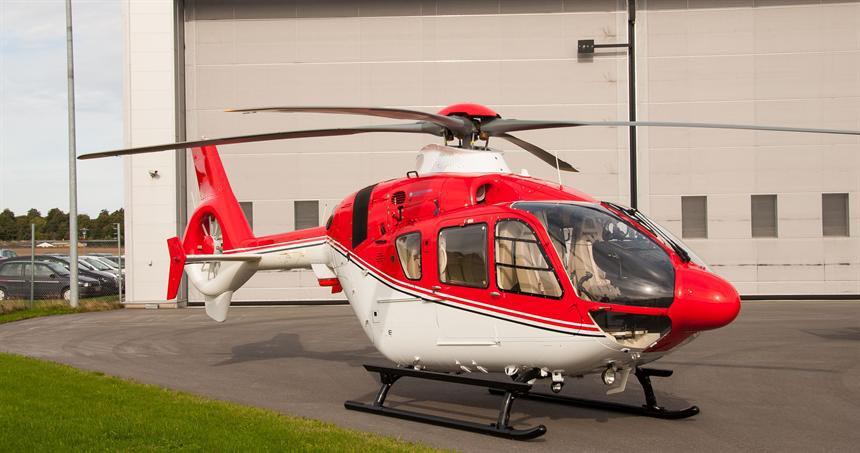

Airbus H135
Introduction
The Airbus H135, formerly known as the Eurocopter EC135, is a twin-engine light utility helicopter that blends advanced technology with operational flexibility. Designed for a wide range of missions—from emergency medical services (EMS) and law enforcement to executive transport and offshore operations—the H135 is celebrated for its quiet operation, high safety standards, and exceptional maneuverability. Since its introduction in the mid-1990s, the EC135/H135 has gained a strong reputation across global markets, particularly in regions where precision flying, short takeoffs, and compact landing zones are essential.
Whether flying over dense urban environments or remote terrain, the H135 delivers a seamless experience for both pilots and passengers. Its design prioritizes mission versatility, cabin comfort, and reduced operational costs, making it one of the most popular light twin-engine helicopters in the world.
Specification of Airbus H135
Manufacturer: Airbus Helicopters (formerly Eurocopter)
Model: H135 / EC135
Engine Type: Twin Turbomeca Arrius 2B2+ or Pratt & Whitney Canada PW206B2/B3 turboshafts
Main Rotor Diameter: 10.2 m (33 ft 6 in)
Length (rotors turning): Approx. 12.2 m (40 ft)
Height: 3.6 m (11 ft 10 in)
Maximum Takeoff Weight: 2,980–3,100 kg (6,570–6,834 lb)
Fuel Capacity: Around 580 liters (153 US gal)
Crew: 1–2 pilots
Passenger Capacity: 5 to 6 passengers in executive layout; up to 7 in utility configuration
Performance and Range of Airbus H135
The Airbus H135 stands out in its category with excellent performance metrics, allowing it to operate efficiently in high-altitude and high-temperature environments.
Maximum Cruise Speed: 259 km/h (140 knots)
Maximum Range: Approx. 620 km (335 nautical miles)
Endurance: About 3.5 hours with standard fuel tanks
Service Ceiling: 20,000 ft (6,096 m)
Rate of Climb: Approx. 1,500 ft/min
Thanks to its twin-engine configuration, the H135 offers enhanced safety and performance in challenging conditions, including IFR (instrument flight rules) and night operations.
Cabin Comfort and Interior of Airbus H135
The Airbus H135's cabin is designed with adaptability in mind. Its flat-floor, rear clamshell doors, and sliding side doors provide easy access and a wide range of interior configuration options. In VIP or corporate configurations, the aircraft is often equipped with high-quality leather seating, noise insulation, and air conditioning to ensure a quiet, smooth ride.
Cabin Volume: Approximately 5.9 m³ (208.4 ft³)
Luggage Compartment Volume: 1.1 m³ (38.8 ft³)
The cabin can comfortably seat up to six passengers, with panoramic windows that offer excellent visibility and natural light. Whether used for short urban hops or longer intercity routes, the Airbus H135 ensures passenger comfort through ergonomic design and low vibration levels.
Avionics and Technology of Airbus H135
Airbus has equipped the H135 with a state-of-the-art avionics suite to reduce pilot workload and enhance flight safety.
Helionix® Avionics Suite: Featuring 4-axis autopilot, synthetic vision, and intuitive flight displays
Integrated Flight Management System (FMS)
Traffic Collision Avoidance System (TCAS)
Night Vision Goggle (NVG) Compatibility
Digital Engine Control (FADEC)
Helionix ensures advanced situational awareness and smoother mission execution. Pilots benefit from a modern glass cockpit, automatic transition modes, and reduced training time, making the H135 one of the most pilot-friendly helicopters in its class.
Operational Advantages of Airbus H135
The Airbus H135 excels in environments where flexibility, agility, and reliability are essential.
Low External Noise Signature: Thanks to the Fenestron® tail rotor, it's ideal for urban and hospital operations
Compact Footprint: Perfect for landing on rooftop helipads or confined sites
High Dispatch Reliability: Over 90% fleet availability globally
Ease of Maintenance: Modular design and built-in diagnostic systems reduce downtime
From corporate and VIP transport to air ambulance and offshore oil platform service, the Airbus H135 offers multi-role efficiency while meeting strict safety and environmental standards.
Who Should Charter Airbus H135
The Airbus H135 is ideally suited for:
VIP/Corporate Travelers: Seeking fast, discreet, and comfortable point-to-point transport
Medical Evacuation (EMS) Operators: Its spacious cabin can fit full medical equipment and stretchers
Utility and Offshore Clients: Needing reliable access to remote or offshore locations
Security and Government Missions: Excellent for law enforcement and surveillance due to quiet operation and maneuverability
Its twin-engine design and IFR capabilities also make it a go-to choice for clients flying over congested cities, mountainous terrain, or under challenging weather conditions.
Charter Cost Estimates for Airbus H135
Chartering an Airbus H135 varies depending on region, availability, and mission profile. Below are general estimates:
Hourly Charter Rate: $2,000 – $3,000 USD
Daily Minimum (2-hour flight time): $4,000 – $6,000 USD
Typical Routes: Intercity executive hops (e.g., Mumbai to Pune), hospital transfers, or luxury resort access
Additional costs may apply for landing permits, fuel surcharges, and overnight crew expenses. Despite its premium pricing compared to single-engine helicopters, the H135 offers unmatched safety and performance in its class.
Conclusion
The Airbus H135 / Eurocopter EC135 remains a benchmark in light twin-engine helicopter design, combining operational flexibility, advanced technology, and exceptional comfort. Whether you're a VIP traveler looking for time efficiency, a hospital in need of rapid patient transport, or a company operating in offshore environments, the H135 provides a dependable and luxurious flight experience.
Its compact design, noise-reducing technology, and robust safety features make it one of the most well-rounded helicopters available for charter today. For those seeking efficient and elegant air mobility, the H135 is not just a transport option—it’s a strategic advantage in the sky.