
Beechcraft King Air C90B
Seats
7
Maximum Range (nm)
1280
ICAO Code
BE9L
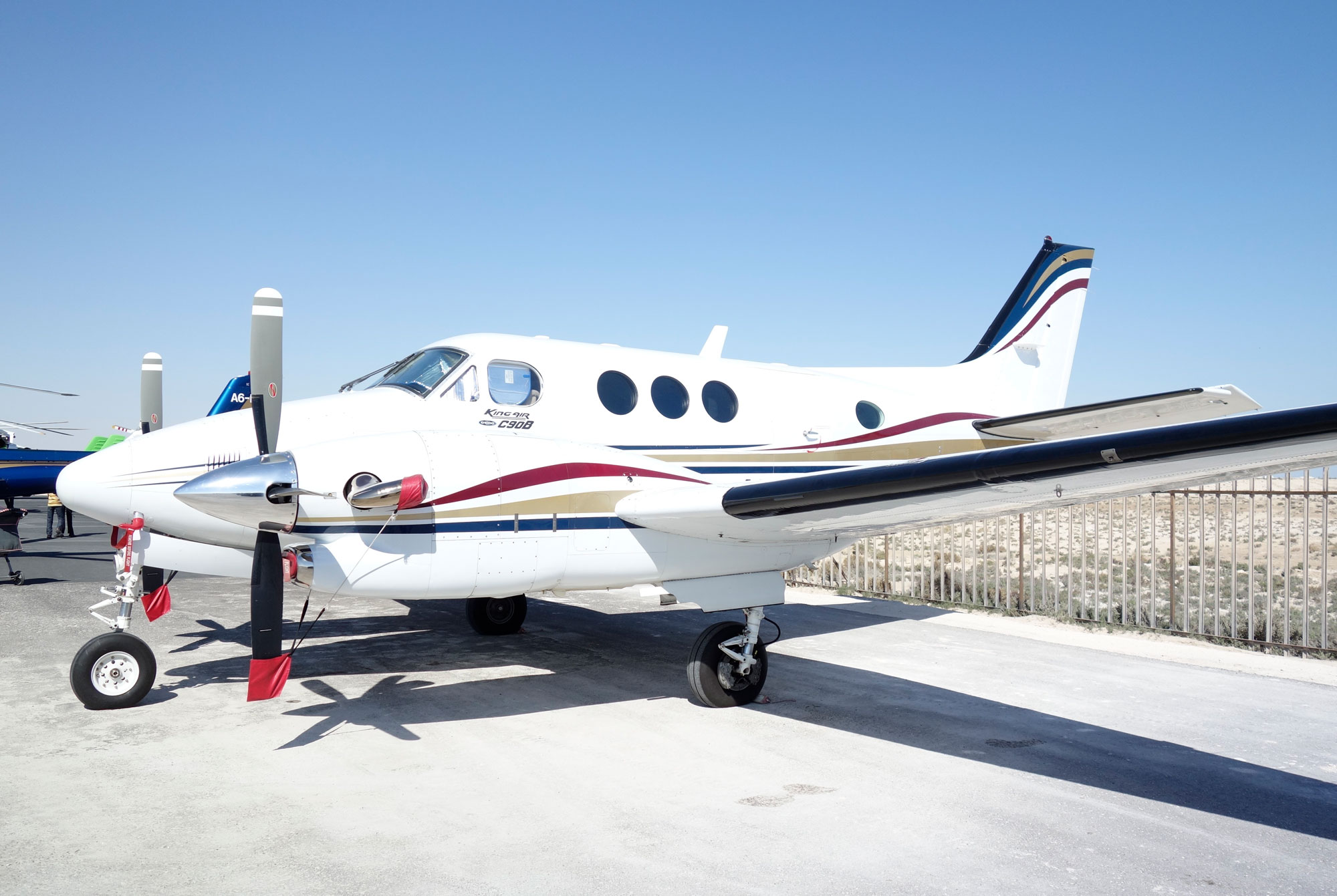

Beechcraft King Air C90B
Introduction
The Beechcraft King Air C90B is a standout in the long-standing King Air family—one of the most respected and reliable turboprop aircraft lines in aviation history. First introduced in 1992, the C90B built upon the proven legacy of its predecessor, the C90A, offering improved performance, reduced cabin noise, and updated systems for smoother, more comfortable operations.
With twin Pratt & Whitney turboprop engines, upgraded four-blade propellers, and a pressurized cabin, the C90B delivers private jet-like convenience with significantly lower operating costs. It’s ideal for short to medium-range missions, connecting remote airstrips and smaller airports with ease. From air charter operations to corporate travel and medical flights, the C90B is a versatile workhorse known for its comfort, efficiency, and reliability.
Specification of Beechcraft King Air C90B
Manufacturer: Beechcraft (a Textron Aviation company)
Model: King Air C90B
First Introduced: 1992
Crew: 1–2 pilots
Seating Capacity: 5–6 passengers
Length: 35 ft 6 in (10.82 m)
Wingspan: 50 ft 3 in (15.32 m)
Height: 14 ft 3 in (4.34 m)
Max Takeoff Weight (MTOW): 10,100 lbs (4,581 kg)
Fuel Capacity: 384 gallons (1,454 liters) usable
Powerplant: 2 × Pratt & Whitney Canada PT6A-21 turboprop engines
Propellers: Hartzell four-blade, constant-speed, full-feathering, reversible propellers
Performance and Range of Beechcraft King Air C90B
Despite its compact size, the King Air C90B is a solid performer in its class. The upgraded PT6A-21 engines, combined with four-blade propellers, contribute to improved climb rates, smoother handling, and enhanced fuel efficiency.
Maximum Cruise Speed: ~270 knots (310 mph / 500 km/h)
Range (with max fuel and typical load): ~1,200 nautical miles (2,222 km)
Service Ceiling: 30,000 feet
Rate of Climb: ~1,650 feet per minute
Takeoff Distance (MTOW, sea level): ~2,450 ft
Landing Distance (typical): ~2,400 ft
Its performance allows the C90B to operate from short runways and high-altitude airports, giving it access to over 5,000 additional airstrips that jets cannot reach. It’s particularly useful for regions with rugged terrain or limited infrastructure.
Cabin Comfort and Interior of Beechcraft King Air C90B
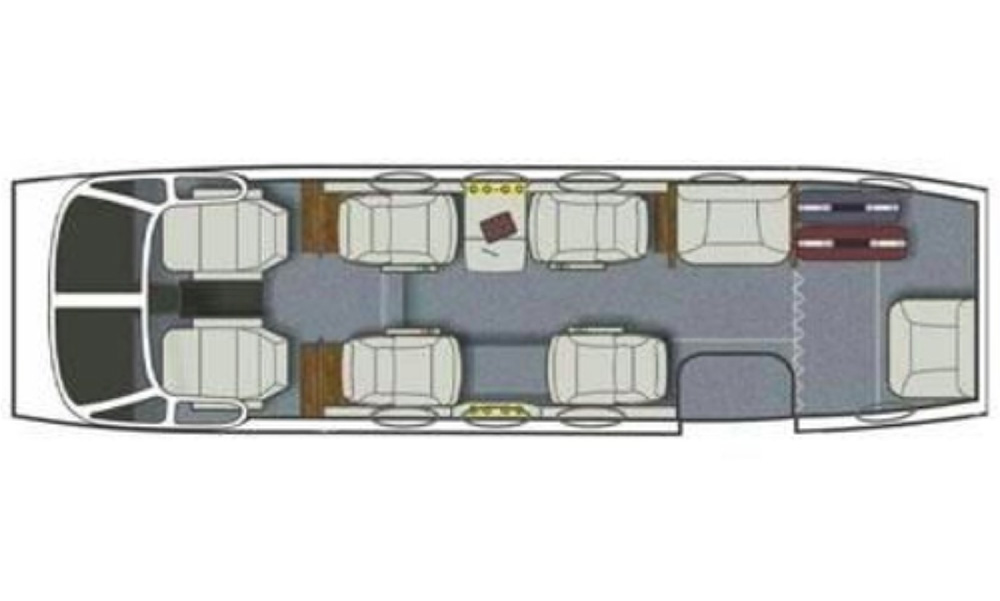
While the King Air C90B is not a large-cabin aircraft, it offers a pressurized and well-designed interior that makes every flight a comfortable experience. The cabin features improvements over the C90A, notably with reduced vibration and significantly lower noise levels thanks to advanced soundproofing.
Cabin Dimensions:
Length: 12 ft 7 in (3.84 m)
Width: 4 ft 6 in (1.37 m)
Height: 4 ft 9 in (1.45 m)Typical Layout: Club seating for 4 passengers + optional side-facing seat
Lavatory: Private aft lavatory (enclosed with curtain)
Baggage Capacity: ~48 cu ft (internal only)
Cabin appointments can include executive-style leather seating, wood veneers, fold-out tables, reading lights, and climate control. While modest compared to larger jets, the C90B’s cabin remains a pleasant environment for up to 2–3 hour flights.
Avionics and Technology of Beechcraft King Air C90B
The King Air C90B introduced important updates in avionics compared to its predecessors. Many units have been upgraded with modern glass cockpit solutions, particularly under aftermarket retrofits such as Garmin G600/750 or Pro Line 21 systems. However, even in its original configuration, the C90B featured reliable and intuitive avionics for pilots.
Original Avionics Suite (standard): Collins Pro Line II
Upgradable Options:
Garmin G600/G750 touchscreen systems
Synthetic vision and terrain awareness
Weather radar and TCAS (Traffic Collision Avoidance)
ADS-B Out/In compliance
Dual-axis autopilot
These upgrades enable the aircraft to meet today’s airspace and safety standards while making flight operations easier, safer, and more efficient.
Operational Advantages of Beechcraft King Air C90B
The King Air C90B’s operational flexibility is a major selling point. It strikes a fine balance between performance, operating costs, and access to remote locations. Key advantages include:
Short Field Capability: With takeoff and landing distances under 2,500 feet, it can serve smaller airports inaccessible to jets.
Rugged Reliability: The PT6A engines are renowned for durability and low maintenance costs.
Low Operating Costs: Typically 30–40% lower than light jets.
Versatility: Equally suited for passenger transport, air ambulance configurations, and cargo conversion.
Single-Pilot Certified: Can be operated with one pilot in charter or private scenarios.
This combination makes it popular with charter operators, government agencies, and private owners needing practical, cost-effective air mobility.
Who Should Charter Beechcraft King Air C90B
The Beechcraft King Air C90B is an excellent choice for a range of private and business travelers who value efficiency over extravagance:
Business Executives: Needing fast access to regional airports and same-day return trips.
Medical Teams: The C90B is frequently configured for air ambulance services due to its pressurized cabin and rear cargo door.
Government and Defense Users: Ideal for surveillance, utility, or short-haul mission requirements.
Leisure Travelers: Great for quick getaways to remote destinations like hill stations, islands, or national parks.
Brokers and Charter Operators: Offering affordable entry-level turboprop charter for cost-conscious clients.
It’s not designed for long-haul luxury, but it delivers tremendous value for short- to medium-range regional missions.
Charter Cost Estimates for Beechcraft King Air C90B
Charter rates for the King Air C90B vary depending on location, operator, aircraft configuration, and flight duration. However, it is generally one of the most cost-efficient twin-engine turboprops on the market.
Hourly Rate (wet lease): $1,500 – $2,200 USD
Daily Minimum (typically): 2–3 flight hours
One-Way Trips (300–500 NM): $4,500 – $6,000 USD (all-inclusive estimate)
Empty Legs and Medical Flights: May vary significantly depending on customization
Compared to light jets that can exceed $3,500–$5,000 per hour, the C90B offers a compelling low-cost alternative for short-haul charters without compromising safety or professionalism.
Conclusion
The Beechcraft King Air C90B has rightfully earned its place as a classic and reliable turboprop aircraft for regional air travel. It combines Beechcraft’s proven engineering with practical features such as low noise, efficient fuel burn, and accessibility to short runways, making it ideal for diverse aviation needs from business to medevac.
While it doesn’t boast the flash or speed of larger private jets, the C90B delivers where it counts: safety, versatility, and cost-efficiency. For passengers and operators seeking a dependable aircraft that gets the job done without unnecessary frills, the C90B is an excellent choice.
Whether you're a traveler looking for a reliable short-hop solution or a charter broker expanding your regional fleet options, the King Air C90B is a value-packed aircraft worth considering.