top of page

Hawker 700
Seats
8
Maximum Range (nm)
2050
ICAO Code
H25B
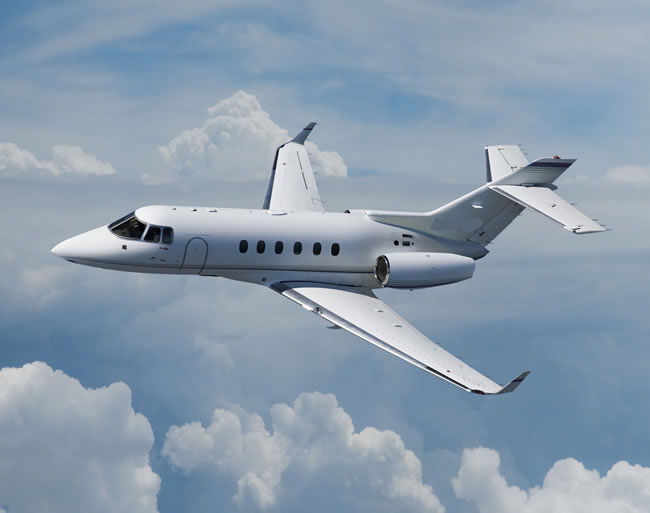

Rick Engles, a Hawker 700 expert who worked for British Aerospace's Corporate Jet Division said three factors explain why the 215 Hawker 700s produced between 1977 and 1984 remain popular: ""cabin, cabin and cabin. The Hawker 700's passenger compartment is bigger than that of competitive airplanes, such as the Learjet 55 and Citation III. It seats up to eight (plus the two pilots up front) and is 21 feet long, six feet wide and almost six feet tall. You'll also find small forward and aft closets, a minimalist forward galley and an aft lavatory through which you access the baggage hold. While the 604-cubic-foot cabin is spacious, the baggage compartment, at 40 cubic feet, is woefully small for today's take-it-all-with-me jet set.
The Hawker 700 can fly almost 2,000 nautical miles with seats full. Available payload with full fuel is 1,350 pounds. Hawkers have been around since 1962 and perhaps no business jet has a longer history of evolutionary performance improvement. Over the years, the aircraft has received significant upgrades in airfoils, engines and systems. Today it remains one of the best-selling business airplanes of all time, with more than 1,000 produced across all models. The Hawker's rugged and simple systems have created an enduring market for the line.
There are other reasons why the 700 remains popular. Unlike some vintage business jets, Hawker 700s can satisfy Stage III anti-noise requirements without costly modification, thanks to their Honeywell TFE731-3RH turbofan engines (3,720 pounds of thrust each, together burning 263 gallons of fuel per hour at cruise altitude).
bottom of page