
Eclipse 500
Seats
4
Maximum Range (nm)
837
ICAO Code
EA50
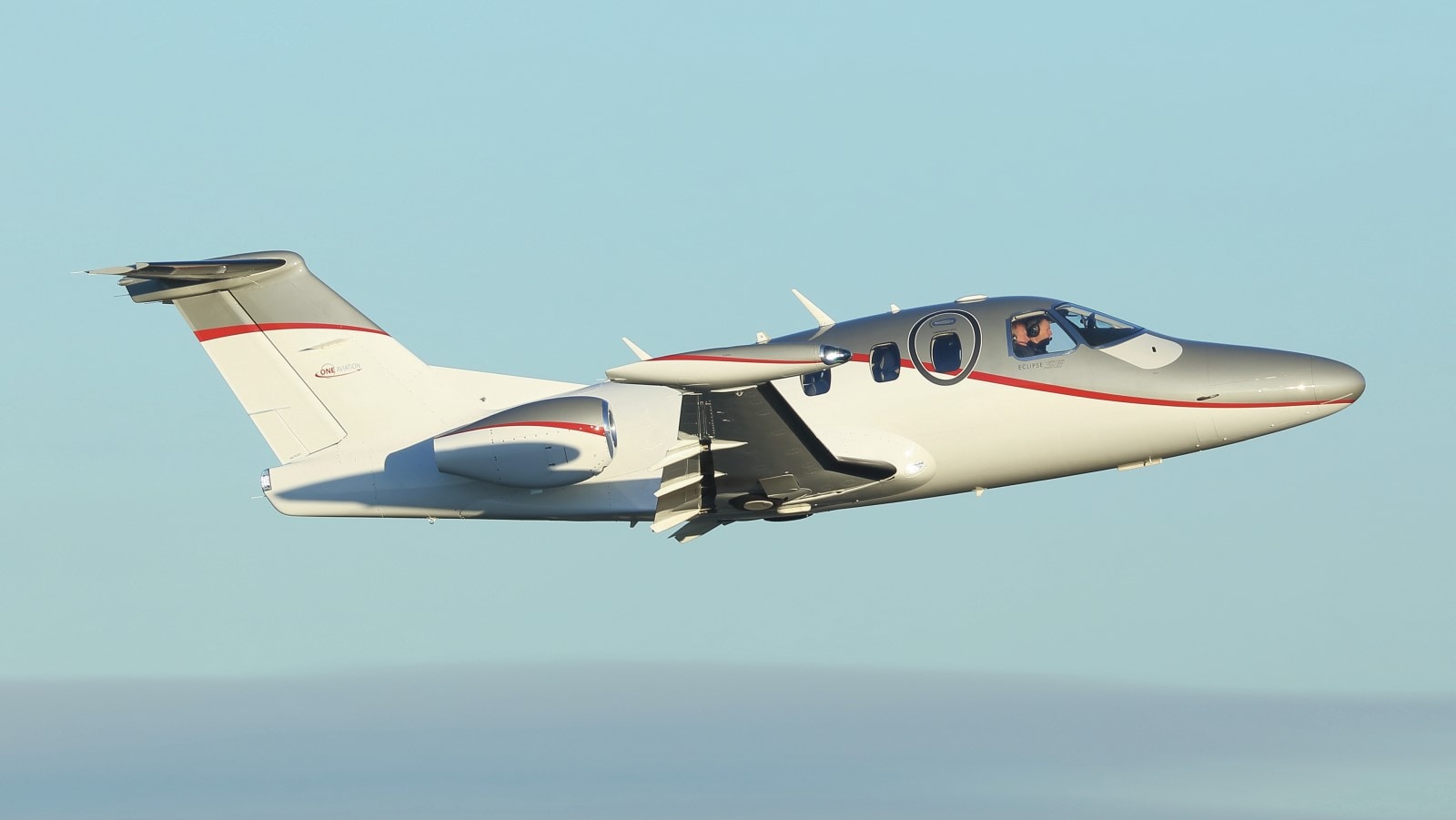

Eclipse 500
Introduction
The Eclipse 500, developed by Eclipse Aviation, is a revolutionary very light jet (VLJ) that marked a significant milestone in the aviation industry. Designed to democratize private jet travel by making it more accessible, the Eclipse 500 is an efficient, low-cost, and highly modern aircraft tailored for short-haul flights. With its compact size, twin-engine design, and glass cockpit, the Eclipse 500 gained popularity among private owners, air taxi services, and charter operators seeking cost-effective operations without compromising safety or performance. It is one of the lightest twin-engine jets in the world, designed for single-pilot operation and capable of cruising at jet speeds.
Specification of Eclipse 500
Manufacturer: Eclipse Aviation (later Eclipse Aerospace)
First Flight: August 2002
Crew: 1–2 (single-pilot certified)
Passenger Capacity: 3–4 passengers
Length: 33 ft 1 in (10.08 m)
Wingspan: 37 ft 9 in (11.51 m)
Height: 11 ft (3.35 m)
Maximum Takeoff Weight (MTOW): 6,000 lb (2,722 kg)
Fuel Capacity: 1,694 lb (768 kg)
Cabin Height: 4 ft 2 in (1.27 m)
Cabin Width: 4 ft 8 in (1.42 m)
Baggage Capacity: ~16 cubic ft (internal only)
The Eclipse 500 utilizes two lightweight Pratt & Whitney Canada PW610F turbofan engines and features an all-composite airframe, which helps reduce weight and enhance efficiency.
Performance and Range of Eclipse 500
Despite its compact size, the Eclipse 500 boasts impressive performance metrics for a very light jet. It can handle business-critical short-haul missions and city-pair flights with speed and agility.
Maximum Cruise Speed: 370 knots (426 mph / 685 km/h)
Range: 1,125 nautical miles (2,084 km) with max fuel and reserves
Service Ceiling: 41,000 feet
Takeoff Distance: 2,345 ft (715 m)
Landing Distance: 2,250 ft (686 m)
This performance allows the Eclipse 500 to fly from city centers with shorter runways—such as London City or Teterboro—and land at remote airports with minimal infrastructure.
Cabin Comfort and Interior of Eclipse 500
The cabin of the Eclipse 500 is compact but intelligently designed. It is configured for up to 4 passengers in a club seating arrangement, though some layouts opt for a fifth seat or additional storage. Due to its VLJ classification, the interior isn't walk-around spacious, but it provides:
Ergonomically contoured leather seats
Air-conditioned and pressurized cabin
Noise-dampening insulation for a quieter flight
Retractable tray tables
Cup holders and reading lights
There is no enclosed lavatory on the Eclipse 500, but some aircraft are equipped with a curtained emergency toilet or privacy solutions. While this limits cross-country luxury comfort, it’s sufficient for short city-hop flights.
Avionics and Technology of Eclipse 500
The Eclipse 500 is outfitted with a fully integrated glass cockpit, designed for safety and ease of operation, especially for single pilots. The original aircraft used the proprietary Avio integrated avionics system, which was later upgraded in post-delivery support.
Key Avionics Features:
Dual Primary Flight Displays (PFDs)
Multi-Function Display (MFD)
GPS navigation and FMS
Integrated autopilot
Engine instrument monitoring
Traffic Collision Avoidance System (TCAS)
Enhanced weather radar (optional)
The simplified avionics reduce pilot workload while offering robust navigation, communication, and flight control tools to support both corporate and private missions.
Operational Advantages of Eclipse 500
The Eclipse 500 brought innovation to private aviation, especially for air taxi and corporate shuttle operations. Its small size and low operating costs made it attractive in niche markets.
Key Advantages:
Cost-Efficiency: With fuel consumption of ~48 gallons per hour and low maintenance costs, the Eclipse 500 is among the most affordable twin-engine jets to operate.
Runway Access: Capable of operating from short and even semi-prepared runways.
Single-Pilot Operation: Reduces crew costs and is ideal for owner-operators or charter companies.
High Utilization: Designed for high-frequency operations with quick turnarounds.
It is also ideal for hub-to-spoke connections, flying into secondary airports closer to final destinations.
Who Should Charter Eclipse 500
The Eclipse 500 is ideal for:
Business travelers looking for cost-effective short-haul connections.
Corporate shuttles for executives between regional hubs.
Air taxi services offering scheduled or on-demand city pair flights.
Private individuals who want affordable access to jet performance without the operating cost of midsize jets.
Owner-operators seeking a single-pilot certified aircraft.
It’s particularly suited for flights under 2 hours or less than 1,000 nautical miles, such as:
New York to Chicago
London to Zurich
Los Angeles to Las Vegas
Mumbai to Ahmedabad
Its value proposition lies in speed, accessibility, and efficiency, not spacious luxury.
Charter Cost Estimates for Eclipse 500
The Eclipse 500 is among the most economical charter jets in the world. Typical hourly charter rates vary depending on region, operator, and availability, but are significantly lower than most other jet classes.
Estimated Hourly Rate: $1,500 – $2,200 USD
Estimated Daily Minimum: 1.5 to 2 flight hours
Typical Round Trip (500-600 nm): $4,500 – $6,000 USD
Note that prices may include positioning fees, crew costs, and airport handling charges depending on the operator’s policies.
Conclusion
The Eclipse 500 is a trailblazing, very light jet that made private jet travel more economical and accessible. While it doesn’t offer the space or amenities of larger aircraft, its performance, efficiency, and affordability make it a strong choice for short-haul business or personal flights. Whether you're a solo executive, a small business team, or a charter traveler looking for a cost-effective solution to skip the airport chaos, the Eclipse 500 is a smart and agile jet worth considering. Compact in size but ambitious in performance, the Eclipse 500 continues to serve its niche with style and substance.